

There is a moment, somewhere on the road between Butare and Rusizi, when Rwanda does something unexpected. The hills open up, and suddenly everything in front of you is green, a green so dense and layered it takes a few seconds to understand what you are looking at. On one side, the ancient canopy of Nyungwe Forest stretches across the ridge, dark and unbroken, one of Africa’s oldest surviving montane rainforests. On the other, row after perfect row of tea bushes step down the hillside in terrace after terrace, catching the morning light. The two things should not coexist so neatly. And yet they do.
This is the Gisakura Tea Garden. And it is one of the most quietly extraordinary places in all of East Africa.
Where Tea Meets the Forest
The Gisakura Tea Company, a subsidiary of Rwanda Mountain Tea Group, sits in the Bushekeri Sector of Nyamasheke District in Rwanda’s Western Province. The estate borders Nyungwe National Park directly: not near it, not adjacent to it in the way most estates describe their proximity to natural features, but genuinely at the edge of it. In some parts of the plantation, the tea rows simply stop where the forest begins.
Nyungwe is not just any forest. It is one of the oldest and most biodiverse montane rainforests on the African continent, home to more than 13 primate species including chimpanzees and the striking black-and-white Colobus monkey, over 300 species of birds, and plant communities that have existed in relative stability for millennia. It is a candidate for UNESCO World Heritage Site status and one of the Rwanda Development Board’s flagship tourism destinations.
The tea garden that grows against its edge is not incidental to this story. The forest creates the conditions that make the tea exceptional. Consistent humidity carried by the canopy, natural shade in the early morning hours, rich soil biodiversity maintained by the forest floor, all of it crosses into the plantation and shapes what grows there. As we described in our detailed feature on visiting Gisakura, when you drink a cup of Gisakura tea, you are tasting an ecosystem. That is not a figure of speech. It is agronomy.
What a Visit to Gisakura Actually Looks Like
RMT offers guided garden tours at Gisakura, and they are unlike most agricultural tourism experiences you have encountered elsewhere.
The visit begins in the plantation rows themselves, early in the day when the light is still low and the workers are already moving through the bushes. Your guide will walk you through the two-leaves-and-a-bud selection process, the precise hand-picking standard that defines the quality of everything Gisakura produces. You will almost certainly be invited to try it yourself. Most people last about thirty seconds before they begin to understand why this is considered skilled work.
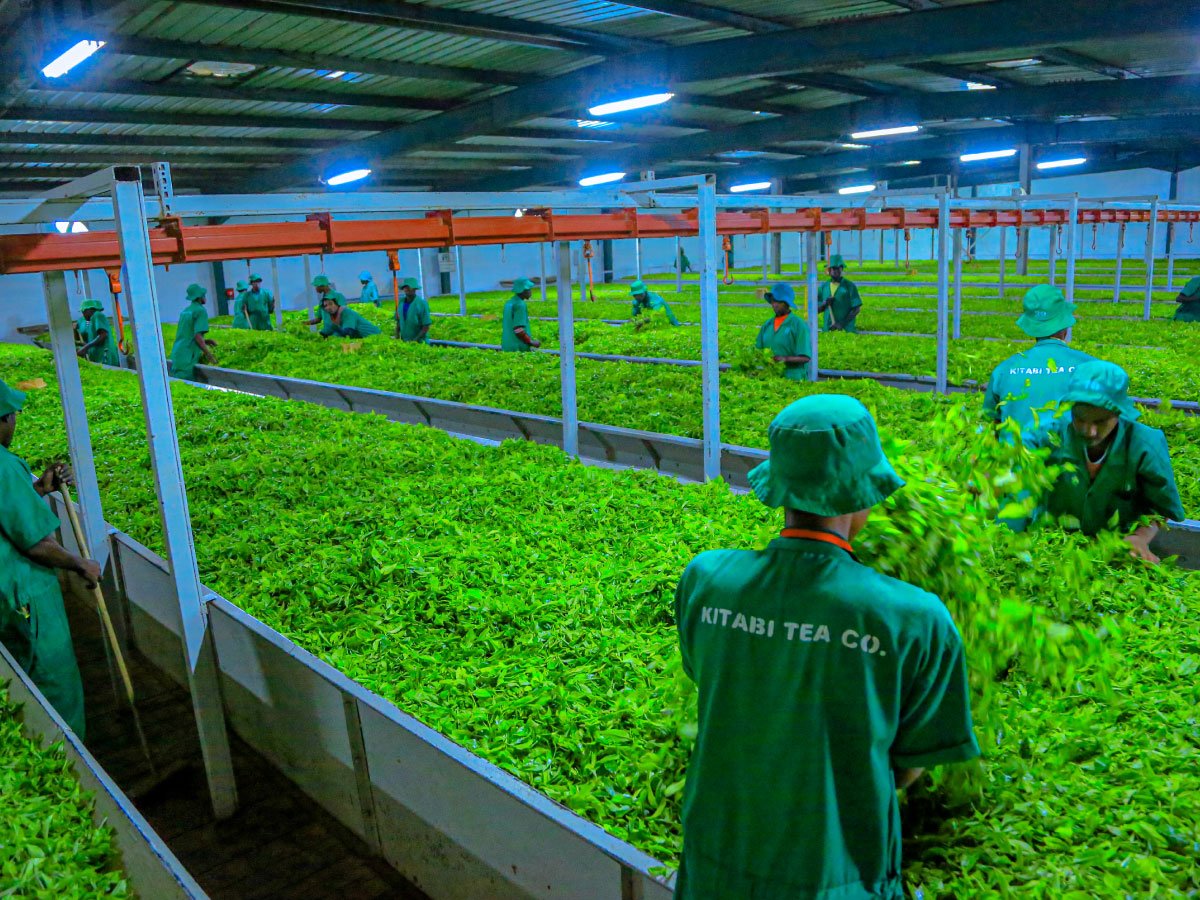
From the plantation, the tour moves to the factory, where green leaf is transformed through withering, rolling, oxidation, and drying into the finished black tea that leaves Rwanda for markets across Europe, Asia, and the Americas. The smell inside a functioning tea factory is something that stays with you: vegetal, warm, slightly sweet, with something underneath it that is almost floral. It is the smell of transformation.
The experience ends where it should: with a cup. A proper Gisakura cup, brewed from leaf that was picked the same morning or the morning before, on the same estate where you are standing. It tastes nothing like what you buy in a supermarket. The brightness is immediate and clean, the depth arrives a few seconds later, and there is something else underneath it all, a complexity that is not quite describable but that connects, unmistakably, to the landscape you have just been walking through.
The Wildlife That Shares This Space
One of the things that distinguishes Gisakura from almost every other tea estate in the world is what happens above the bushes.
Colobus monkeys, specifically the black-and-white Colobus, live in a patch of forest within the plantation boundary. They are not shy. Visitors consistently report seeing troops of them feeding in the canopy at the plantation’s edge, moving between the forest and the trees that RMT maintains throughout the estate as shade cover and biodiversity corridors. Watching a troop of Colobus move through the canopy above a row of tea bushes is the kind of scene that stops conversation.
Beyond the plantation itself, Nyungwe Forest offers some of the best wildlife experiences in Rwanda. Chimpanzee trekking in Nyungwe brings visitors face to face with one of East Africa’s last large and intact chimpanzee populations. The canopy walkway, suspended above the forest floor at 50 metres, gives a perspective on the ecosystem that very few places on earth can offer. Bird watching in Nyungwe is among the finest on the continent, with endemic species that draw specialists from around the world.
This means that a visit to Gisakura is not a standalone activity. It is a natural anchor for a full Nyungwe experience, giving the day structure around something that is productive, grounded, and for most visitors, genuinely moving in a way that pure wildlife tourism alone cannot always deliver.
How to Plan Your Visit
The Gisakura Tea Garden is located approximately 220 kilometres southwest of Kigali, a drive of around three to four hours depending on road conditions. The route passes through some of Rwanda’s most dramatic highland scenery, and the drive itself is worth doing slowly if you have the time.
Tours are best arranged in the morning, when the light is good, the workers are active in the fields, and the forest edge is most alive with bird and primate activity. Afternoon visits are also possible and offer a different quality of light over the terraces.
For practical planning, accommodation is available in the Gisakura area, with options ranging from simple guesthouses to more comfortable lodges close to the park entrance. Gisakura pairs naturally with a Nyungwe itinerary that includes chimpanzee trekking (which requires an early start), the canopy walkway, or the Isumo Waterfall hike. Lake Kivu is another two hours west, making the broader southwestern circuit one of the most rewarding itineraries Rwanda offers.
To arrange a garden tour directly through RMT, the Visit Gardens page is the right place to start. The team can help coordinate access, timing, and what to expect on the day.
The Bigger Picture
There is something worth sitting with when you stand at the edge of a Rwandan tea garden and look out across a forest that has been there since before recorded history.
Rwanda’s relationship with its land is complex and layered. The tea industry that employs tens of thousands of people across these highlands: supported nationally by the National Agricultural Export Development Board and internationally by certifications including Rainforest Alliance and ECOCERT, grew up in the same landscape as some of Africa’s most extraordinary biodiversity. The fact that both things have survived and are now being woven together into a coherent tourism proposition is not accidental. It is the result of choices, made over decades, about what this land is for and who it serves.
When you visit Gisakura, you are visiting a place that has made those choices well. The forest is still there. The tea is still growing. The people are still here, doing work they know how to do. And the cup at the end of the tour is, frankly, exceptional.
That combination : of place, product, and people, is what makes the Nyungwe forest tea experience something that stays with you long after the drive back to Kigali.
To explore more of what RMT’s gardens produce, visit our online shop. To learn more about the science behind why Gisakura tea tastes the way it does, read Why Altitude Makes Rwandan Tea Taste Different. And for the full story of how a leaf picked in Gisakura becomes the tea in your cup, From Mountain to Cup takes you through every stage of the journey.


