If you’ve ever looked at a tea invoice and seen codes like BP1, PF1, or D1 and wondered what you were actually buying, you’re not alone. Every new buyer hits this wall. The good news: once you understand the logic behind it, the alphabet soup turns into a simple, useful shorthand.
Where the grading system comes from
Tea grading wasn’t invented to confuse buyers, it was built to standardize a global trade. The system took shape during the British colonial tea trade in India and Ceylon (now Sri Lanka), then spread to East Africa as plantations were established there in the early twentieth century. Grades describe leaf size and style, nothing more, they are not a judgment of flavor quality on their own, though leaf size does affect how a tea brews. We’ve covered this history in more depth in our primer on BP, PF, and FBOP grades, which is worth bookmarking as a companion to this article.
CTC vs. orthodox: the first fork in the road
Nearly all Rwandan tea, including RMT’s production, is processed using the CTC method : Crush, Tear, Curl. Mechanical rollers cut the leaf into small, uniform pieces instead of hand-rolling it whole. This is what gives East African black teas their signature briskness and strong, quick-brewing character, and it’s why CTC dominates blends built for milk tea, English Breakfast, and tea bags. Orthodox tea, by contrast, keeps the leaf whole or lightly rolled, common in Darjeeling and parts of China. Because CTC breaks the leaf during processing, there’s no such thing as a “whole leaf” CTC, every CTC tea falls into a broken-leaf, fannings, or dust category.
The grades you’ll actually see on an RMT invoice
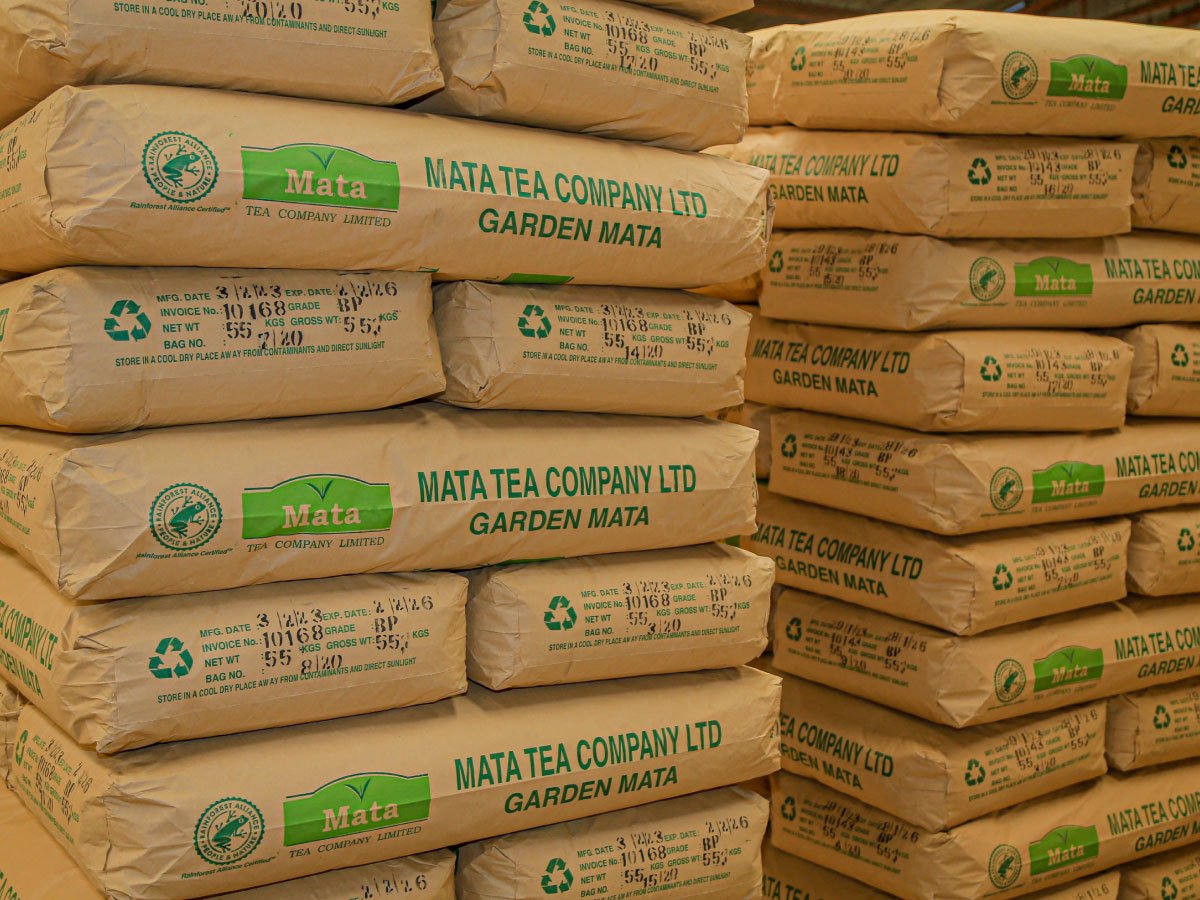
BP1 (Broken Pekoe 1) is the top CTC grade and the one RMT is best known for internationally. It consists of medium, well-formed granules that deliver strong color, body, and a clean, brisk cup, the reason our Kitabi BP1 has picked up recognition at international cupping competitions.
PF1 (Pekoe Fannings 1) is finer than BP1, brews faster, and is the workhorse grade for tea bags and blends that need consistency at scale.
Dust grades (D1, D2) are the finest particles left after sorting. Don’t let the name put you off, dust grades brew quickly and intensely and are essential for high-volume tea bag production.
Pekoe, in this context, doesn’t describe a flavor. It’s a leaf-style term rooted in a much older whole-leaf grading tradition (think OP, FOP, TGFOP) that Western tea buyers will recognize from Indian and Sri Lankan teas. Rwanda’s factories, RMT’s Kitabi, Nyabihu, Rubaya, Gatare, Gisovu, and Mata among them, work within the CTC branch of that same family tree, which is why you’ll see “Pekoe” embedded in codes like BP1 and PF1 rather than standing alone.
For a full breakdown of how these grades map to specific gardens and their flavor notes, Wikipedia’s overview of tea leaf grading is a solid, neutral reference if you want the wider international context beyond East Africa.
Why the grade on the label actually matters to you
Grade isn’t a formality, it’s a specification. If you’re sourcing for tea bags, PF1 or dust grades give you speed and consistency. If you’re building a premium loose-leaf or specialty blend, BP1 is where you look first. Buyers who understand this can specify exactly what they need instead of guessing from a sample.
It also matters for price. Grade discipline is one of the reasons Rwandan tea consistently commands a premium at the Mombasa Tea Auction, the region’s central marketplace for East African teas, a point we go into further in why Rwanda tea tops Mombasa. Buyers pay more when they trust that a BP1 from one factory lot will taste and perform the same as the last one they bought. Consistency, not just quality, is what the grade is really guaranteeing.
Going further
Grade codes are only the starting point. If you’re placing your first order and want the fuller picture, our upcoming Buyer’s Grade Glossary walks through every grade RMT produces, garden by garden, so you can match a code to a cup before you commit to a container. Reach out to our sales team directly if you’d like samples specified by grade.