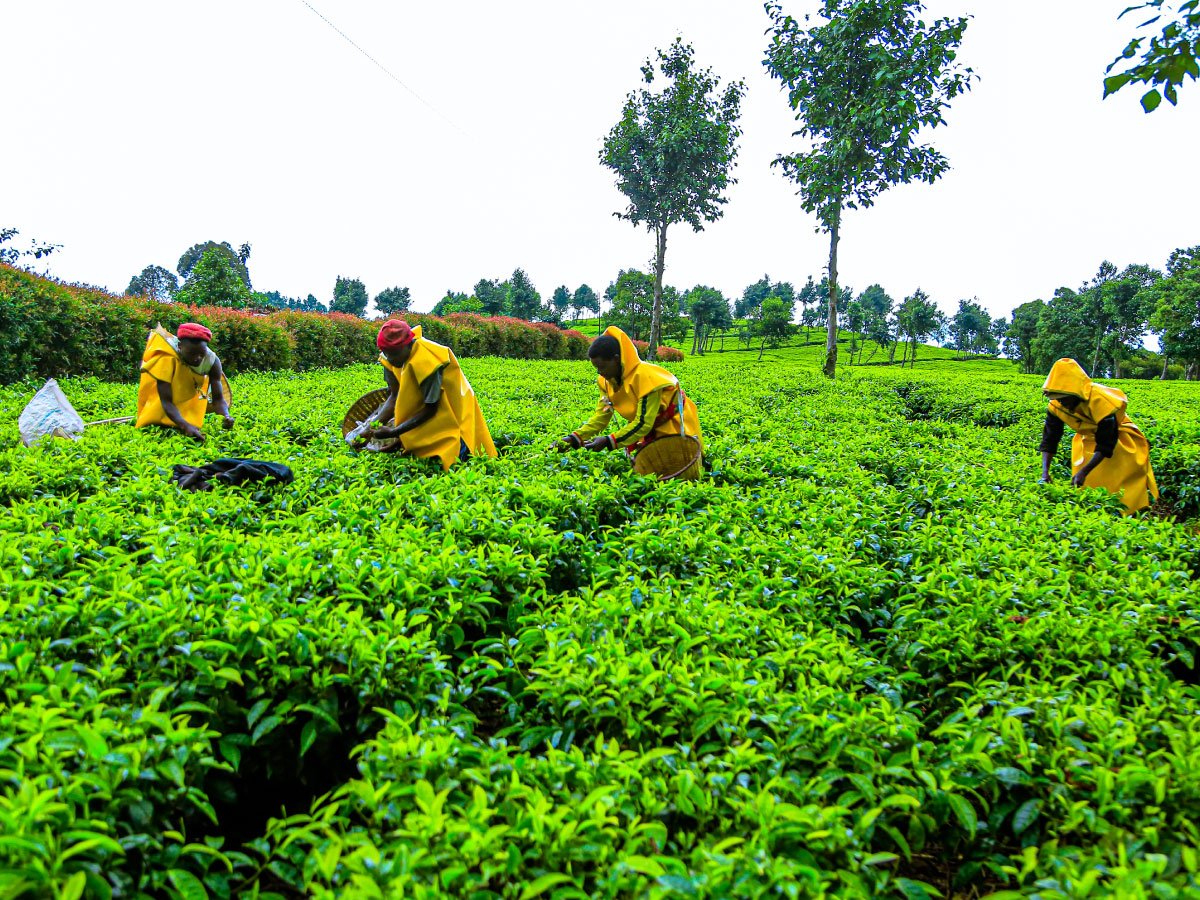
Ask anyone who has tasted Rwandan tea for the first time what struck them, and the answer is rarely vague. They will talk about brightness. About a clarity in the cup that feels almost crisp. About a depth of flavour that seems disproportionate to how light the brew looks in the cup. It is the kind of reaction that makes people ask the obvious question: what is actually different about this tea?
The honest answer is not mysterious, and it is not marketing. It is altitude, and the slow, deliberate biology it forces onto every tea bush growing in it. Rwanda Mountain Tea’s gardens sit between roughly 1,900 and 2,800 metres above sea level, a range that places them among the highest tea-growing elevations in the world. That elevation is not a charming detail about the landscape. It is the single biggest reason the tea tastes the way it does, and the science behind it is worth understanding properly.
The Plant Slows Down, and That Changes Everything
Camellia sinensis, the plant behind every cup of tea on earth, grows faster in warm, low-altitude conditions and slower as the air thins and the temperature drops. At Rwanda’s elevations, where the Gisakura garden sits at 1,950 metres at the factory and gardens like Rutsiro and Nyabihu climb above 2,800 metres at their highest plantations, that slowdown is significant.
Here is why it matters. A tea bush growing quickly in hot, low-elevation conditions produces leaf tissue rapidly, but that tissue is comparatively thin and the plant has less time to accumulate the secondary compounds that give tea its flavour, aroma, and antioxidant content. A bush growing slowly at altitude does the opposite. It builds leaf tissue more deliberately, packing more cellular density into every leaf, and it has considerably more time to synthesise and concentrate the compounds that matter most to flavour.
This is the central mechanism behind what tea scientists and specialty buyers call the high-altitude advantage, and it is exactly the principle that Rwanda’s National Agricultural Export Development Board (NAEB) identifies as one of the country’s core competitive strengths in the global tea market. NAEB, the government body responsible for developing Rwanda’s tea, coffee, and horticulture exports, has continued to invest in expanding the country’s high-altitude tea estates precisely because of the quality advantage this terrain provides.
What Slow Growth Actually Builds Inside the Leaf
It helps to be specific about what is accumulating inside a slow-growing tea leaf, because the difference between a good cup and an exceptional one comes down to actual chemistry, not just intuition.
Polyphenols, the compounds responsible for much of tea’s astringency, body, and antioxidant power, build up more substantially in leaves that develop slowly under cooler conditions. Catechins, a major category within that polyphenol family, follow the same pattern. The plant is essentially under mild, sustained stress at altitude, thanks to cooler temperatures, stronger UV exposure, and a shorter effective growing window, and it responds to that stress by producing more of the protective compounds that double as flavour compounds in the cup.
Then there are the compounds that emerge specifically during processing. When fresh tea leaf is oxidised during the orthodox or CTC manufacturing process, enzymes convert a portion of those polyphenols into theaflavins and thearubigins. Theaflavins are responsible for the bright, brisk character and the reddish-gold colour you see in a well-made Rwandan black tea. Thearubigins contribute the deeper amber tones and body. The cool nights and warm days typical of Rwanda’s highland climate are particularly effective at triggering strong formation of both compounds, which is part of why Gisakura and the other RMT gardens are known internationally for teas with such vivid colour and brisk character in the cup.
None of this happens by accident. It happens because the leaf had the raw material, in the form of concentrated polyphenols, and the climate, in the form of those cool-night, warm-day cycles, to produce it.
Why the Air Itself Plays a Role
Altitude does something else that is easy to overlook: it changes the quality of sunlight reaching the plant. At nearly 2,000 to 2,800 metres, UV radiation is more intense than it is at sea level, simply because there is less atmosphere to filter it.
Plants respond to elevated UV exposure by producing more protective compounds, many of which overlap directly with the flavour and antioxidant compounds tea drinkers value. It is the plant’s own defence mechanism, essentially synthesising its own sunscreen, and that defence mechanism happens to taste extraordinary once it reaches your cup. This is a documented pattern across high-altitude crops generally, not just tea, and it is one of the quieter reasons mountain-grown produce of all kinds tends to carry more concentrated flavour than the same crop grown at lower elevation.
The Volcanic Soil Underneath It All
Altitude does not work alone. Beneath Rwanda’s tea gardens lies volcanic soil, formed from the geological activity of the Virunga region and the broader East African Rift system. This soil is mineral-dense, well-draining, and naturally fertile in ways that directly support the chemistry described above.
Tea plants draw nitrogen, potassium, and a range of trace minerals from the soil, and those minerals are essential building blocks for the amino acids and flavour compounds the plant produces. Rwanda’s volcanic earth supplies these in unusually rich concentration. The result is a plant that is not only growing slowly because of altitude and temperature, but is also extremely well-resourced while it does so. Slow growth without good soil produces a stressed, mediocre plant. Slow growth with rich volcanic soil produces exactly the conditions specialty tea makers spend their careers chasing.
This combination of altitude and soil is something we explore in more depth in The Secret Behind Rwanda’s Award-Winning Teas, where Tea Master Richard Masaba of the East African Fine Teas Association describes the outcome plainly: the combination of Rwanda’s natural growing conditions and the expertise applied throughout production creates teas with a clarity, brightness, and complexity that is genuinely difficult to find elsewhere.
Rainfall, Temperature, and the Rhythm of the Mountains
The third piece of this puzzle is climate rhythm. Rwanda’s position just south of the equator gives its tea-growing regions remarkably consistent year-round temperatures, while the altitude keeps those temperatures moderate rather than tropical. Add Rwanda’s pattern of two distinct rainy seasons, generally falling between March and June and again between September and January, and you get a growing environment with steady, reliable moisture rather than the extreme wet-dry swings that stress tea plants in other regions.
At Nyabihu, average rainfall runs to roughly 1,333mm a year with average temperatures around 15 degrees Celsius. At Gisakura, closer to Nyungwe Forest, annual rainfall climbs to around 2,054mm, supported by the humidity the forest itself generates. Each garden has its own particular rhythm, which is part of why Rwanda Mountain Tea’s different Garden Marks taste recognisably different from one another despite all being grown in the same country, often less than a hundred kilometres apart.
Why This All Matters in the Cup
Put all of this together and you get a plant that grows slowly because of cool, high-altitude temperatures, that builds dense, mineral-rich leaf tissue thanks to volcanic soil, that produces elevated levels of polyphenols and amino acids partly as a defence against intense UV exposure, and that transforms those compounds into theaflavins, thearubigins, and a complex aromatic profile during careful processing.
That is not a story about marketing. It is a story about plant biology responding to a specific set of environmental pressures that happen to converge, almost perfectly, across Rwanda’s highland tea regions. It is also exactly why teas from gardens like Rutsiro, Kitabi, and Gatare have earned recognition at international competitions including the Global Tea Championship and the Great Taste Awards, and why Rwanda continues to rank among the top tea-producing nations globally despite its comparatively small size.
The practical upshot, for anyone holding a cup of RMT tea, is that the brightness and depth you taste is not an accident of branding. It is measurable chemistry, built leaf by leaf, over the unhurried timeline that only altitude can provide.
Taste the Difference for Yourself
If you want to taste how this science plays out across different gardens, the easiest place to start is by comparing teas from different elevations and estates. Our retail shop carries blends from across the RMT network, and the variation between them is a genuinely interesting way to taste altitude and terroir in action. If you would rather see it for yourself, the Visit Gardens experience takes you directly into the highland terraces where all of this begins.
And if you are sourcing tea for a business that wants to put real science, not just a good story, behind its menu or shelf, our commercial and wholesale team can walk you through which Garden Marks suit your needs.
The mountains did not just give Rwandan tea its scenery. They gave it its chemistry.